
Consumer health
Cosmetics
One of the EDQM’s strategic objectives is to respond to emerging public health challenges for the benefit of consumers. This includes co-ordinating efforts to ensure the safety and quality of cosmetics in Europe through standard-setting activities, overseen by the European Committee for Cosmetics and Consumer Health (CD-P-COS), and quality-testing activities, run by the European Network of Official Cosmetics Control Laboratories (OCCL Network).
The CD-P-COS develops standards, policies and common product quality and safety requirements that enhance consumer health protection in this field. The OCCL Network promotes technical collaboration in the field of cosmetics market surveillance. This network encourages member states to co-operate on product quality surveillance activities and strengthens both market surveillance and the enforcement of the European legal framework for cosmetic products.
Meetings
The CD-P-COS held its 2024 annual plenary meeting, with all its members and observers in attendance, on 19 March. It also participated in a joint meeting with the OCCL Network, composed of over 50 OCCLs from Europe and beyond, working together to co-ordinate market surveillance and strengthen testing capacity. This was an opportunity to combine efforts to improve the market surveillance of perfumes, hair dyes, sunscreens and baby products and thus reduce non-compliance in these product groups.
Work programme
The CD-P-COS collected expert comments on the first edition of the publication “Safer tattooing – Overview of current knowledge and challenges of toxicological assessment”. This work supports national authorities and ink manufacturers in conducting their mandatory assessments of the inherent microbiological and toxicological risks of intradermal injection of tattoo inks and permanent make-up. A new edition, scheduled for 2025, will supplement Committee of Ministers Resolution ResAP(2008)1 on requirements and criteria for the safety of tattoos and permanent make-up, as well as current European legislation.
As part of its public awareness activities, the CD-P-COS recommended that NCAs co-ordinate information campaigns designed to better inform consumers to help them play a more active role in protecting their own health by avoiding known risks. Examples cited were infographics, social media campaigns, brochures and other advertising that could be jointly prepared.
Publications and public awareness material
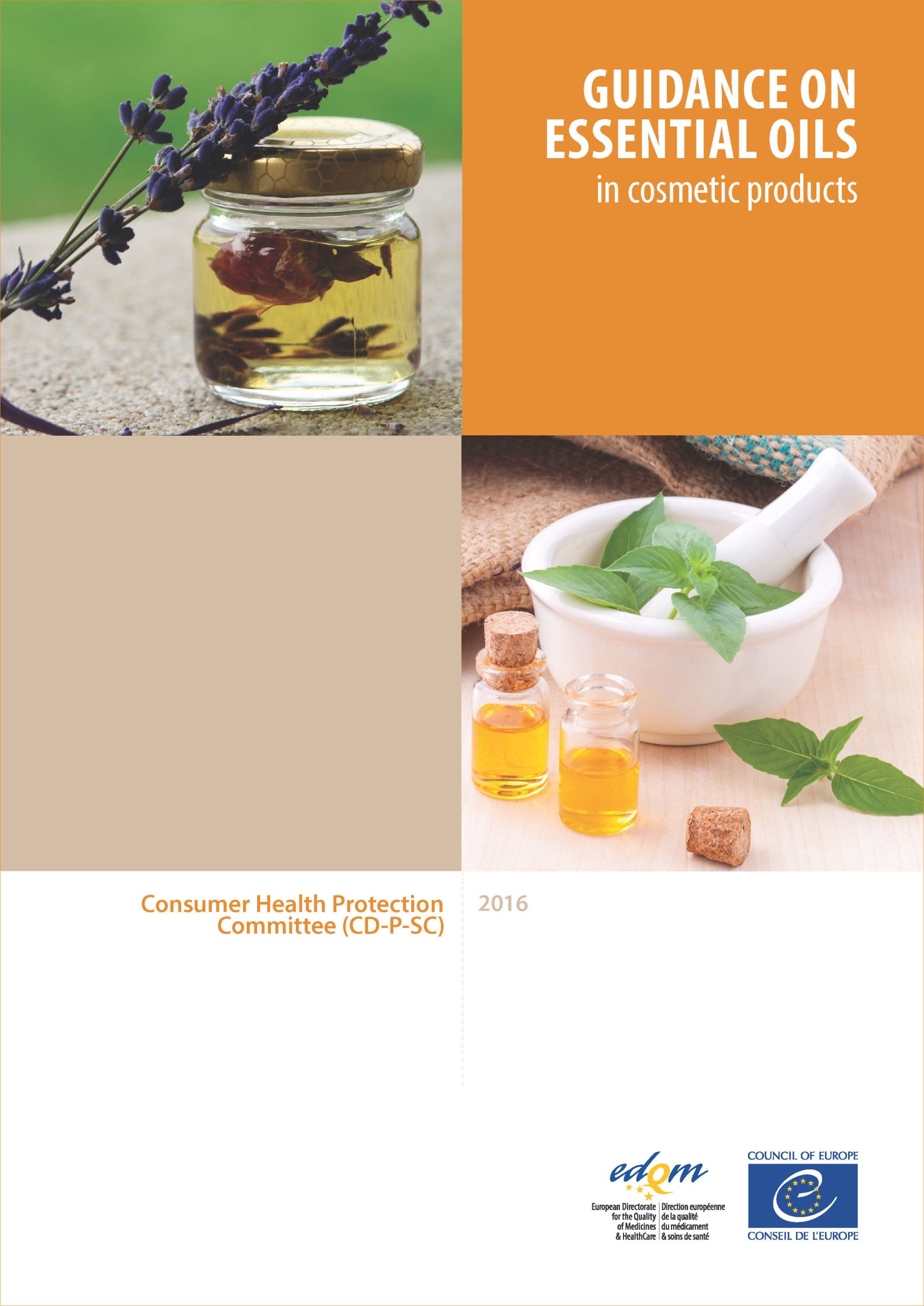
Essential oils in cosmetic products
The CD-P-COS finalised its review of quality requirements and recommendations for risk assessment as addressed by the “Guidance on essential oils in cosmetic products” and supported the release of the entirely updated second edition.
This new edition contains up-to-date quality criteria and recommendations for the manufacture and safety assessment of cosmetic products containing natural ingredients, including essential oils distilled from plants. Essential oils, perceived as “natural”, may be considered beneficial or innocuous by consumers. They may, however, have a high sensitising potential – through skin contact or inhalation – and therefore pose serious health risks. The protection of vulnerable populations such as children or sensitised individuals is particularly important. This guide helps ensure the safety of cosmetic products in line with European and national cosmetic legislative frameworks, thereby protecting consumer health.
Protected every step of the way – The work of the EDQM on consumer health protection
EDQM On Air is a public health podcast brought to you by the EDQM. From food contact materials and cosmetics to tattoo inks and special guidelines to protect children, the EDQM strives to protect consumers from toxic and unsafe substances. Listen to find out how.
The OCCL Network
Quality control of cosmetics: market surveillance studies
The Chemical and Veterinary Investigation Office (CVUA) in Karlsruhe, Germany, hosted the 14th meeting of the OCCL Network in November 2024. This event brought together participants from national authorities of 26 countries. It also provided an opportunity to conduct hands-on training on a multi-component analytical method for on-site participants.
The OCCL Network runs and co-ordinates market surveillance studies (MSS) to verify the regulatory compliance of cosmetics in Europe. Within this framework, findings of traces of toxic nitrosamines in nail varnishes raised concern among network members.
An MSS on cosmetics for children, started in 2011 and now in its fourth round, is in progress to monitor compliance of these products with European regulations. The study focuses primarily on cosmetic products designed to appeal to children that have shown a poor level of compliance in the past.
Nitrosamines
The work on the validation of an analytical procedure for the determination of non-polar N-nitrosamines in cosmetics by LC-MS/MS was pursued in 2024. Publication of the method is scheduled for 2025.
Proficiency Testing Scheme studies
In 2024, a PTS study on the determination of polar nitrosamines was finalised, giving the participants the opportunity to assess their ability to determine these toxic compounds in nail varnish.
Two other studies were launched: one focused on the identification and determination of glucocorticoids in body and face creams and the other on the determination of hydrogen peroxide in hair bleaching solutions and in toothpaste.
Communication with partners and stakeholders
The EDQM and the European Commission DG GROW pursued their dialogue on the market surveillance of cosmetics, established in 2022 with a view to co-ordinating and regularly exchanging information on the work of both organisations in this field.
In 2024, OCCL Network members and the EDQM undertook a number of activities to raise awareness of their role in the area of cosmetics, taking part in conferences and events, and with the dissemination of a video presentation.