Quality & safety of substances of human origin
Organs, tissues and cells
The EDQM’s transplantation activities are dedicated to safeguarding public health while upholding human rights and dignity. Since the Council of Europe’s work in this area began in 1987, it has focused on setting high standards that ensure the ethical and safe use of substances of human origin, protecting both donors and recipients. By promoting the non-commercial nature of these life-saving substances, the EDQM works to foster equitable access to transplantation services and guarantee the protection of human dignity at every stage of the process.
Overseen by the European Committee on Organ Transplantation (CD-P-TO), these activities include the collection of international data and monitoring of practices in Europe, knowledge sharing between member states (health authorities, professional organisations and experts) through training and networking, and the production of reports and guidance documents.
Work programme
Family approach to discuss deceased organ and tissue donation
The Committee of Ministers of the Council of Europe adopted Recommendation CM/Rec(2024)8 on the family approach to discuss deceased organ and tissue donation on 27 November 2024. This instrument promotes a family-centred approach to discussing organ and tissue donation after a person’s death.
Addressing organ shortages requires a multi-faceted approach to broaden the potential donor base – comprising robust policies, organisational models and public information campaigns that promote the donation of organs and tissues from deceased persons. Including the topic of deceased organ and tissue donation in family conversations in the right way, at the right time and by the right person can have a profound impact on consent and authorisation rates for the post-mortem donation of organs and tissues and on the well-being of families.
The measures put forward in the recommendation, drafted by the CD-P-TO, include providing clear information about donation processes, implementing registries for donation decisions, educating healthcare professionals on family discussions and establishing national guidelines for family care and end-of-life choices. The measures aim to improve consent rates for donation, and thus the availability of often long-awaited organs and tissues to treat patients in need, and support families during the grieving process.
Santander Summit outcomes
The Santander Statement was one of the main outcomes of the Global Summit “Towards Global Convergence in Transplantation: Sufficiency, Transparency and Oversight”, organised by the Organización Nacional de Trasplantes (ONT, the Spanish National Transplant Organisation) in Santander (Spain) in November 2023 in the context of the European Donation Day. The statement provides high-level recommendations aimed at improving patient care, making progress towards sufficiency in transplantation, ensuring transparency and oversight of practices, strengthening measures to prevent human trafficking for the removal of SoHO and trafficking in SoHO, and fostering responsible innovation in the clinical use of SoHO.
In addition to the statement, a series of insightful papers covering all the ground research and work done in preparation for the summit were published in Transplantation, the official journal of The Transplantation Society. The papers are available online at the following address: https://journals.lww.com/transplantjournal/toc/2025/01000.
Inspired by the seminal recommendations derived from the Summit, the World Health Assembly (WHA) adopted Resolution 77.4 on increasing availability, ethical access and oversight of transplantation of human cells, tissues and organs. It urges member states to take action to face pressing challenges in the field and requests, among others, the WHO Secretariat to support countries through the development of a Global Strategy in Transplantation, expected to be presented at the 79th WHA in May 2026.
Fight against unethical transplantation practices
Travel for transplantation is the movement of persons across jurisdictional borders for transplantation purposes. It may be a viable, ethical solution in exceptional, justified circumstances that involve official channels. It becomes unethical, however, when it involves trafficking or when resources (such as organs, professionals’ time and expertise and transplant centre facilities) are devoted to providing transplants to non-resident patients, undermining a country’s ability to provide transplant services for its own population.
The EDQM Network of National Focal Points on Travel for Transplantation (NETTA) was established in line with Resolutions CM/Res(2013)55 and CM/Res(2017)2 of the Council of Europe Committee of Ministers. To date, 34 countries have designated national focal points (NFPs), which provide information to the Registry of International Travel for Transplantation Activity (RITTA) on an annual basis.
The international exchange of information about patients who have travelled abroad to receive an organ transplant serves to shed light on this phenomenon, identify possible transplant tourism hotspots, profile donors and recipients, and provide insight into the quality of the transfer of care and its impact on post-transplant outcomes. By the end of 2024, RITTA contained information on more than 1 200 patients. The network met in May 2024 for its 8th technical meeting, which was an opportunity to exchange information and best practices on how to address this issue both within the network member countries and among other stakeholders.
In 2024, the Council of Europe Convention against Trafficking in Human Organs (CETS No. 216) was signed by Chile. To date, 15 states have ratified this convention and another 13 have signed it.
Technical guides
The EDQM develops and publishes comprehensive technical standards and guidance in organ donation and transplantation and the application of tissues and cells, targeting a broad range of healthcare professionals, inspectors and national authorities. The Guide to the quality and safety of organs for transplantation (Organ Guide, 9th edition, 2025) and the Guide to the quality and safety of tissues and cells for human application (Tissues & Cells Guide, 5th edition, 2022), two benchmark compendiums in this field, are regularly revised and updated to ensure they keep pace with scientific developments and regulatory changes. Under the aegis of the CD-P-TO, the dedicated working groups of internationally recognised experts entrusted with this precious and highly rewarding mission worked actively in 2024 to draft the 9th edition of the Organ Guide and the 6th edition of the Tissues & Cells Guide, scheduled for publication in 2025 and 2026, respectively.
The revision and update process for these guides is optimised for efficiency and focuses on integrating the latest scientific developments and evidence-based knowledge, gathered through careful scanning and critical review of the latest research, literature and relevant publications in the field.
Future editions of these technical guides will transition to a modern online platform designed to meet the needs of public consultation and the publication of guidelines. The move to an advanced, interactive online format, easily accessible for users during consultations and daily application in clinical practice, has begun. The new platform will also have a direct connection with the SoHO publication platform being developed by the European Commission. This collaboration will be developed over time. The EDQM and the European Commission SoHO platforms should be linked by Q2 2027, before the new SoHO regulation comes into force.
Work programme (continued)
Joint programmes
As part of its co-operation with the European Commission, the EDQM held the 4th European training course on Quality Management for Tissue Establishments from 2 September to 17 October. Some 200 participants from 35 countries took part. This training event provided tools for the successful implementation of a quality management system, from identification of a potential donor through processing and storage of the tissues or cells, to the final preparation for application in the patient.
Within the same co-operation framework, the EDQM contributed to the strengthening of capacities in the field of organ donation and the dissemination of best practices among member states through the project on donation after circulatory death (DCD), aimed at identifying best practice and elaborating guidelines for the development of a DCD programme.
The EDQM also co-ordinated an exchange of experience among member states and the development of best practice guidelines (focused on organs, tissues and cells) in the field of biovigilance in order to strengthen national and European biovigilance systems.
Best practice guidelines resulting from both of these projects will be delivered in 2025.
In addition, all severe adverse reactions and events (SARE) reported for tissues and cells in the previous year (primarily by EU member states) were analysed and results published on the European Commission website.
European Donation Day
The 2024 European Donation Day (EDD) was hosted on 5 October by Lithuania, which also held the Presidency of the Council of Europe Committee of Ministers at the time. The day was punctuated by several related events in the Lithuanian capital city of Vilnius under the theme “Lithuania – The Capital of Organ, Tissue and Cell Donation”. In the days leading up to the event, the EDQM’s CD-P-TO held its annual meeting there.
The EDD opening ceremony took place on the evening of 4 October, with the participation of representatives from government ministries, local and regional authorities, and patient and healthcare professional associations. Several prominent buildings were illuminated in green, the EDD colour in 2024, to mark the occasion. An international conference entitled “Organ Donation and Transplantation: Let’s Build Bridges for Life” was held on 5 October, enabling those involved in donation and transplantation processes to discuss best practice and share their experiences.
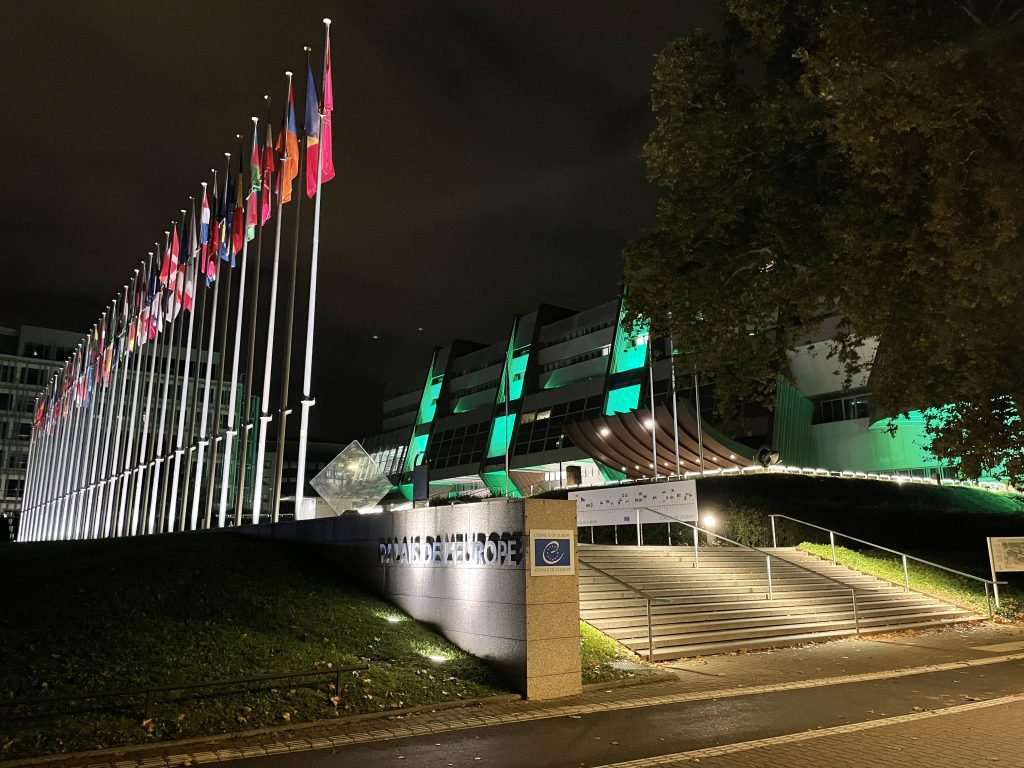
The Palais de l’Europe in Strasbourg, the Council of Europe headquarters, was also illuminated in green to promote voluntary, non-remunerated donations, honour the individuals and families behind them, and send a message of thanks and support to the healthcare professionals who save and improve lives by making donation and transplantation a reality.
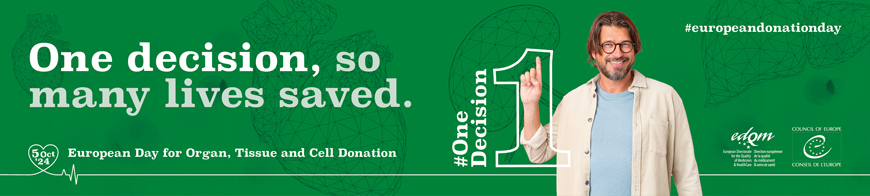
EDD was supported by a social media campaign, #OneDecision, which invited everyone to reflect on the power that one decision can have. One decision to become a donor can save up to eight lives through organ donation and improve over 100 more through tissue and cell donation.
Publications and public awareness material
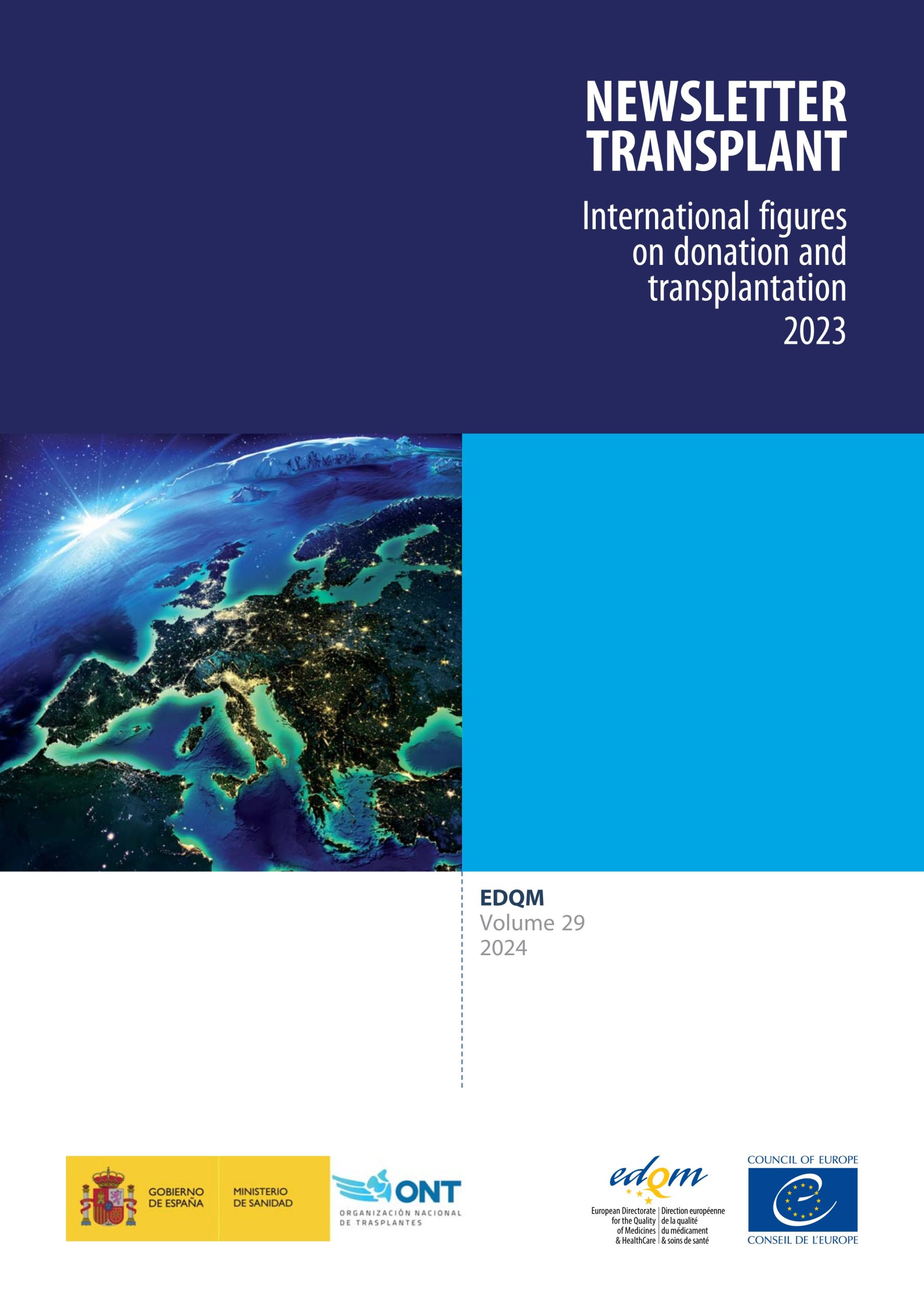
Newsletter Transplant
The 2024 edition of the Newsletter Transplant presented data on organ, tissue and cell donation and transplantation activities worldwide in 2023. This report is produced thanks to the invaluable support of the Spanish ONT, which co-ordinates the collection, compilation and analysis of international data annually through a vast network of health authorities and officially designated individuals involved in donation and transplantation activities. It provides comprehensive information and data on organ, tissue and cell donation and transplantation, the management of waiting lists, refusal rates for donation and authorised centres for transplantation treatments.
Last year’s report covered a record 89 countries. Organ transplantation activities increased globally by 9% in 2023, an increase driven by an expansion of both deceased and living organ donation over 2022. Donation after the circulatory determination of death gained extraordinary importance over the period studied, with death being determined by circulatory criteria in one out of four deceased donors worldwide.
Other publications
Other publications from the CD-P-TO working groups included:
- “Acceptance of Organs from Deceased Donors with Resolved or Active SARS-CoV-2 Infection: A Survey From the Council of Europe”, Transplant International (November 2024).
Transplantation – A story of hope and courage – Liz Schick
EDQM On Air is a public health podcast brought to you by the EDQM. Liz Schick, president of the World Transplant Games Federation, shares her deeply personal and truly inspirational story.